
Part One: How the Beatles Changed the World, Music, and Culture — Quotes from Global Icons

May 15
87 min read
Updated: 2 days ago
Just how did the Beatles change the world? Dive into a curated collection of quotes from notable musicians, artists, and cultural figures celebrating the Beatles as the most influential and greatest band of all time.

From classic rock, heavy metal, and punk to hip-hop, rap, classical, blues, soul, country, pop, and more, read powerful quotes from notable and influential musicians, artists, and cultural figures revealing how the Beatles influenced them personally, transformed the music industry, and shaped global culture. This curated collection highlights why the Beatles are widely considered the most influential and greatest band of all time, featuring tributes from many of the biggest icons across genres and decades.
Every Beatles fan seems to have a Beatles story. Mine doesn't start with my parents or an older sibling's record collection. Instead, it began with a random Sunday morning when I was 18. Two songs came on the radio, back to back, that sounded so fresh and urgent — even in 1992 — that my first thought was, "Who is this?" When the DJ announced it was The Beatles, it sparked an obsession that lasted for several years and made me realize something fundamental about the band: part of their genius, and the joy in exploring their entire catalog, lies in their boundless variety and unpredictability. Plus, they made making music and being in a band seem like the easiest and most fun thing in the world.
I remember exactly what songs they were: "Slow Down" and "Leave My Kitten Alone," early R&B/rock 'n' roll tunes by Larry Williams and Little Willie John that the Beatles covered, with John Lennon's impassioned vocals taking the lead. At the time, my favorite band was Queen, but the Beatles soon replaced them. I still love Queen, of course. As a kid, I had heard popular Beatles songs on the radio and liked them, but I was still a decade away from discovering their remarkable body of work.
I've personally met and read about people over the years who have a similar story — a Beatles conversion or discovery moment. They thought they had the band pegged from a few famous hits or a surface knowledge of their catalog and career. That perception is then upended by the ferocity of "Helter Skelter," the haunting and searing melancholy of "While My Guitar Gently Weeps," or the stripped back vulnerability of "Don't Let Me Down." Others listen to the full Abbey Road medley or watch the exuberant back-to-basics final rooftop concert and that narrow view gets shattered — or something "just clicks."
There's a common experience among listeners who suddenly stumble upon a lesser-known track, performance, or album that reveals the depth and diversity just beneath the surface. It's when you realize the band that made "When I'm 64" also unleashed "Revolution." Or that huge chasm between, say, "Please Please Me" and "I Want You (She's So Heavy)."
Here's a quote from someone on Reddit: "It took me an incredible amount of time to actually get the Beatles. I thought they were the most overrated band of all time as I became a music nerd. A couple months ago, I started digging a couple songs off Revolver and then got hooked to Strawberry Fields Forever. I then decided to give a full focused listen to Abbey Road to see if things had changed. And boy, the hook from 'Something' lifted me from the ground. Then the medley happened and I fell in love. After that I started listening to their albums in chronological order and finally, I can say that this band deserves every single drop of praise they deserve.”
That's partly why their legacy endures. You might think you have them figured out, but then you hear a song that flips the script. Stewart Copeland of The Police said, "You've got to give it up: the Beatles were heavier than any heavy metal band; they were happier cheerful pop music more than any other happy cheerful pop music; they had deep angst... they had it ALL. Every aspect. They did it 100,000%." Someone else called them "genreless."
Musician Melissa Etheridge remarked, "They wrote every song. We're basically rewriting all their songs, is what we're doing. How can you be in music and not be a Beatles fan?" And legendary composer Burt Bacharach summed up their impact this way: "...when people ask me which composers I think have had the greatest influence on the sound of today's music, four names automatically come to mind: John, Paul, George and Ringo."
But perhaps the most uncompromising testament to their universality comes from far outside the realm of traditional pop or rock. Thrash metal pioneer Scott Ian of Anthrax strips their legacy down to its absolute, undeniable essence: "If you're not listening to the Beatles, you're not listening to music. If you don't educate yourself on the Beatles... whether you're a fan or a musician, there's nothing better."
This very idea — that The Beatles were so much more than any single box you could put them in — is the heart of this post. That, along with dispelling the ridiculous notion (according to some) that they were a boy band or overrated. I think they're incredibly underrated.
What follows are eloquent and passionate expressions by some of the most significant musicians, artists, and notable figures from the past 60-plus years across every genre: metal, rap, punk, funk, hip hop, R&B, soul, country, pop, rock, blues, classical, and even TV & film. In their own words, they share how the Beatles' work as songwriters, musicians, and artists didn't just impact them personally. More than that, it changed the world and influenced the very fabric of so much of our culture.
-Suzana
Note: I'm always updating this post with new quotes as I find them. A great resource is Perry Gartner, who runs https://x.com/BeatlesPraise and https://perrygartner.substack.com/.
Everything else I've personally either transcribed from original video or audio clips or copied as written from other original source websites.
Feel free to bookmark and share.
It is split up into two parts. The link to part two is at the bottom.
***
On the evening of December 8th, 1980, a distraught Stevie Wonder interrupted his concert at the Oakland Coliseum to announce to his audience that John Lennon had been shot and killed. The following night, Bruce Springsteen opened his show at the Spectrum in Philadelphia by telling the crowd, "The first record that I ever learned was a record called 'Twist and Shout.' If it wasn't for John Lennon, we'd all be someplace very different tonight."
Brian May from Queen said the following: The Beatles were our bible. Absolutely at every stage in their career and their music development, they were models. And they still are to me, I must say. I love all those albums. To me, they are the greatest. They are the pinnacle of writing, performance and ethos of rock music. They broke down so many barriers, they changed the world many times. I will always love the Beatles without any reservation.
Freddie Mercury (Queen): The only person I wish I had met was John Lennon. 'Cause he's the one that I did idolize and I just thought he was just a very beautiful human being and I'm sad to say that I didn't get to meet him. He's the only one.
He was the greatest, as far as I was concerned. John Lennon was larger than life, and an absolute genius. Even at a very early stage when they were the Beatles, I always preferred John Lennon’s things. He just had that magic.
AC/DC’s Brian Johnson, when asked if he’s ever met somebody famous that he was in awe of: Yes, that has happened, and it was Paul McCartney. I didn't know what to say to him. I mean, for the first time I was absolutely tongue-tied... I couldn't speak... And then we became friends, which is even harder to describe.
(When asked to name his favorite song in the world) Right off the top of me head, the thing that makes me smile every time I hear it is "Get Back." And if you listen to Ringo's drumming on there, it's sensational.
Lemmy Kilmister (Motörhead): I did like the Stones, but they were never anywhere near the Beatles — not for humor, not for originality, not for songs, not for presentation. Brian Epstein cleaned [the Beatles] up for mass consumption, but they were anything but sissies. They were from Liverpool... a hard, sea-farin' town, all these dockers and sailors around all the time who would beat the piss out of you if you so much as winked at them... Ringo's from the Dingle, which is like the fucking Bronx. The Rolling Stones were the mummy's boys — they were all college students from the outskirts of London... All they had was Mick Jagger dancing about. Fair enough, the Stones made great records, but they were always shit on stage, whereas the Beatles were the gear.
The Beatles changed everything. Not just rock music, but life, the universe, everything... After the Beatles, no one was ever the same again, the young and the old, singers and politicians, sportsmen and actors. Everyone.
And everything the Beatles did broke new ground. They were amazing — greatest rock group ever on the earth.
Keith Richards (The Rolling Stones): The Beatles forced us to write songs... It was the first time an act had broken in America. We didn’t see us traveling, in other words. And I think the Beatles probably gave us… it broadened the horizons.
Mick Jagger (The Rolling Stones): Their success in America broke down a lot of doors that helped everyone else from England that followed, and I thank them very much for all those things. They gave us our first big hit in England, which was a song they wrote “I Wanna Be Your Man.” And we were very grateful for that because it really broke us in England.

Smokey Robinson (singer, songwriter, & producer): As a black person, I loved them because they were the first white group to come along who had that much impact, who were that popular, who were that world-renowned to say, hey man, we grew up and we listened to black people.
They were like this enormous life force... I'm a huge Beatles fan, man. They wrote some of the greatest songs ever in life — just great, great songwriters. Those songs are going to live on and on and on, they're going to be like Beethoven, you know.
The Beatles came along and acknowledged that they'd grown up listening to black music and loved it and were inspired by blues and R&B… A lot of bands had the same experience but they didn't say it. Man, we at Motown were so excited about that... because we were all Beatles fans. Who wasn't? We appreciate them so much.
Chuck D (Public Enemy): My 1 favorite groups of ALL TIME. #1 The Beatles in Rock and Roll #1 Run Dmc in HipHop.
At the time, when the Beatles are coming from a whole different country with a different admiration and respect for black music than what was even here in America, with its racist ways, the Beatles — and the Rolling Stones — opened the eyes and the ears of many young people that tried to find out, where did these songs come from? And the Beatles would let you know.
The Beatles' whole career was part of the soundtrack of my life… I'm part of the result of the British Invasion...They had a whole bunch of different approaches on how they were going to create music for the masses, that we all could not not hear... "Tomorrow Never Knows" is kind of like the beginning of noise rock to me. To me, The Beatles are unbelievable. I grew up on them.
The Beatles have written songs that you'd experience and [go], "Wow, that says it all," so Lennon/McCartney songs [were big influences as a lyricist].
Joe Tex (soul singer-songwriter): Yes sir, thank God for the Beatles. They came along just at the right time, to save R&B. It was really dying. People like Chuck Berry were about to be forgotten.
Dr. Dre (rapper & producer): Here with one of my heroes!! Paul McCartney is cool AF!! I’m chillin with one of the fucking Beatles!!
John Lennon was a wildcat. Any time you’ve got genius and you’re presenting it to the masses... you’re going to be looked at in a certain way, especially because most people are afraid of change, you know what I mean? People that are so different and have the ears of so many people and they’re almost like followers to you, it’s dangerous to a lot of people. And I believe John Lennon was one of those people...
Sinéad O'Connor (singer-songwriter & activist): I have this theory that the Beatles were actually the 4 horsemen of the Apocalypse, you know? Insofar as they changed the entire face of the planet.
Lennon had a sense of everybody's right to stir shit. He was very brave and vulnerable, and saw that it was brave to show one's vulnerability. He would probably love the rap movement. In a lot of ways, rap is where his voice can still be heard. People underestimate the subliminal impact of not just his music but the things he was doing publicly, like the shit-stirring. All of that had a huge influence on rap, and on little, bold, big-mouthed Irish singers.
Alice Cooper (singer & songwriter): The Beatles, they are the standard. You measure everything by the Beatles. Every musician I know... I've talked to Ozzy and Steven Tyler. We all look at the Beatles and go "That's how to write a song." So as scary as Alice Cooper is, [producer] Bob Ezrin would never let us put a song on the album that wasn't a song. It wasn't just a riff with a bunch of lyrics on it. It had to be a song with a verse, a B section, and a chorus to it. Because that's what the Beatles did. Now, we could twist it into an Alice Cooper song, we learned how to write listening to McCartney and Lennon... I’m still pretty sure they’re aliens. I don’t think they’re from this planet.

Gene Simmons (KISS): We wanted to be the Beatles on steroids… We were completely inspired by them. There is no way I’d be doing what I do now if it wasn’t for the Beatles.
The Beatles on Ed Sullivan was like a combination of religion and music and I don't know what else. The clock stopped for me; everything stopped. It was probably one of the milestones in human history. Scientists call them singularities. They happen once in a while and have a quantum effect on life as we know it on the planet… It really changed the world. It was like in the movie "2001," when the apes went up to the monolith and touched it — a quantum leap forward.
The Beatles are above and beyond anything that anybody’s seen in music over, oh, 200 years. Easily. Not since the Renaissance.
Tom Petty (musician): You just knew it, sitting in your living room, that everything around you was changing. I remember earlier that day, a kid on a bike passed me and said, "Hey, the Beatles are on TV tonight." I didn’t know him, he didn’t know me — and I thought to myself, "This means something." This was the thing that made me want to play music. You saw that it could be done. There could be a self-contained unit that wrote, recorded and sang songs. And it looked like they were having an awful lot of fun doing it. Within weeks of that show, you began to hear the sounds of garage bands on the weekends leaking through the neighborhood — of kids out in the garage playing.
They were just out in front. There was the Beatles — and then there was everyone else. And everyone else could be great, but the Beatles were leading the way. And that’s just irrefutably true. I mean, if you just look back and follow the history of the music, that’s clearly what was going on. And it was obvious at the time.
It’s hard to explain to somebody that wasn’t there at that time how profound it was. I think that they were just hungry for anything that would inspire them, and they weren’t musical snobs at all. Having that kind of open-door policy of 'let’s try anything' was really revolutionary. You know, I don’t know if people really understand how incredibly, just, bold that was. To kind of just leave the format that you arrived in, and invent another one. It’s just unbelievable.

You know, before the Beatles, you didn’t really see rock stars trying to evolve. They were quite happy to have a hit, and often the follow-up was almost exactly the same. That’s what I’ve always really been amazed at — the Beatles had that incredible success and really could have put anything out, and it would have been a hit. But they kept their head and weren’t affected by all that going on around them and focused on music.
And they had such great taste, you know? When you think about the hideous things people did with the Moog synthesizer, the Beatles used it so tastefully [on Abbey Road] that you hardly noticed it, it was just part of the texture of the record. They had such a great sense of sound, of textures — I think it’s one of the reasons those albums still hold up.
It’s just strange, isn’t it, when you think about it, how all the perfect pieces of the puzzle were there. This really starts to get into a spiritual level of perfection [sighs]. What are the chances of that falling together, those kind of singers being in one band, let alone being great players and writers, you know? It’s startling, it won’t be done again. It’s a force of nature bigger than all of us.
Ernie Isley (The Isley Brothers): When the Beatles came on Ed Sullivan, on the left side of the couch was me; on the right side of the couch was my younger brother Marvin; and in between us was Jimi Hendrix. Ed Sullivan said, "Ladies and gentleman, the Beatles!"... and after that there was a meeting with all the band, and my eldest brother Kelly took the floor and he said, "These guys have changed everything. And it's legit." It started to sink in that these guys had actually changed popular music. They had actually changed rock and roll. This was not hype. This was not somebody's publicity agent. They were the genuine page-turner of music. It was just their destiny to fulfill and they fulfilled it in a marvelous way, in a way that will forever be.

Steven Van Zandt (E Street Band): It transformed America. On February 8th, there were no bands in America; on February 9th we had Ed Sullivan, and on February 10th, everybody had a band in their garage. It was literally overnight.
The Beatles on The Ed Sullivan Show was the biggest bang of my life [and] the most important event in rock 'n' roll history — a phenomenon that hasn't been seen before or since. It was a new world of infinite possibilities that began for us on February 9, 1964. I believe a thousand years from now history will be divided into Before The Sixties B.T.S. — and After The Sixties — A.T.S. The reason being that the Sixties changed us fundamentally: the way we live, the way we interact, and the way we think. And the Beatles had everything to do with that. They were the Big Bang. And the ripples from that explosion will never stop.
Bruce Springsteen (singer & songwriter): This was different, shifted the lay of the land. Four guys, playing and singing, writing their own material… Rock ‘n’ roll came to my house where there seemed to be no way out… and opened up a whole world of possibilities.
Al Green (singer, songwriter, & producer): To see them do the Ed Sullivan Show — that’s when I was introduced to that sound, that phenomenon, and that euphoria. I thought it was just fantastic. I thought it was just unbelievable. I think the music of The Beatles had a phenomenal affect upon the whole world.
Joe Perry (Aerosmith): The night The Beatles first played the Ed Sullivan Show, boy, that was something... I never saw guys looking so cool. I had already heard some of their songs on the radio, but I wasn't prepared by how powerful and totally mesmerizing they were to watch. It changed me completely. I knew something was different in the world that night.
The Beatles did everything long before anyone else. They weren’t afraid to try things and to experiment with a lot of sounds. In 200 years, when you look up ‘rock ‘n’ roll’ in the dictionary, it’ll have a picture of The Beatles next to it.
They were together for maybe eight years, but God, they turned the world upside down! So did the Stones. There was a whole bunch of bands that came over to America where if they had an English accent and a catchy song, they were a big star for five minutes. But The Beatles and Stones – we really learned a lot from them. The Beatles did something, and then the Stones would do something a little while later. The Beatles did Sgt. Pepper, and then The Stones did Their Satanic Majesties Request, which was their own psychedelic thing. The albums covers were almost the same, and it’s like they were buddies, too.
When The Beatles stopped touring, they said, ‘Nobody is listening to us. We can’t even hear ourselves play because they’re screaming so loud.’ But if they had stayed together, I think they would have been able to tour the way the Stones did. Of course, it was fucking stunning how good The Beatles were live when you listen to some of the recordings. They had no monitors, but when you listen to the recordings, they’re still doing it, and it’s so damn good!
(On John Lennon’s murder) I didn’t know what to do, what to say, how to react. I had met him briefly at the Record Plant, but I never knew the man. Without him and his Beatles, I wouldn’t have been doing what I was doing. I saw him as a searcher, a brave artist. He could have lived off those Beatles songs for the rest of his life, but at the end of his life he was still making daring and important music. He had written some of the best pop songs of all time, yet he was a true rock ‘n’ roller. John was, is, and always will be, one of my great inspirations.

Chrissie Hynde (The Pretenders): I remember exactly where I was sitting. It was amazing. It was like the axis shifted. It was kind of like an alien invasion… I honestly didn’t think the Beatles were from this world.
Billy Joel (singer & songwriter): That one performance changed my life… Up to that moment, I’d never considered playing rock as a career. And when I saw four guys who didn’t look like they’d come out of the Hollywood star mill… who played their own songs and instruments, and especially because you could see this look in John Lennon’s face — and he looked like he was always saying: "Fuck you!" — I said: "I know these guys, I can relate to these guys, I am these guys. This is what I’m going to do — play in a rock band."
I don’t think there will be anybody like the Beatles. They will be played 100 years, 200 years from now, I have no doubt about that, just like Beethoven.
Joe Walsh (The Eagles): I took one look on The Ed Sullivan Show and it was "Fuck school. This makes it." I memorized every Beatles song and went to Shea Stadium and screamed right along with all those chicks… I was a senior in high school… and I was screaming and crying.
Nils Lofgren (E Street Band, Crazy Horse): I was a classical accordionist, I started playing aged five in Chicago. Bless my mom and dad, they paid for nine years of classical accordion lessons and I just took to it. It was a great musical backdrop for me. At maybe ten or eleven, somebody played me a Jerry Lee Lewis or Chuck Berry record. At the time I wasn't emotionally mature enough to understand the guttural street soul of it. It's three chords, it's quite repetitive. I didn't get it. But fast forward a couple of years and all of a sudden there's the Beatles with minor chords and incredible melodies, really interesting harmonies with that street soul of rock 'n' roll. It just floored me. Literally it possessed me. Literally overnight almost, I fell in love with the entire British Invasion and of course the American counterpart - Buffalo Springfield, The Byrds, Moby Grape.
Through The Beatles, I discovered Muddy Waters, Howlin' Wolf, Little Richard, Stax-Volt, Motown. Within a couple of months there were hundreds of these incredible pieces of music I was completely oblivious to. My brother Tom started teaching me some guitar. I started playing in club bands but it was always a hobby. Nobody thought you could do it for a living, it was just beautiful music that inspired us all.
George Thorogood (musician): After The Ed Sullivan Show, Feb. 9, 1964, at approximately 8:04pm, after that moment every album, every guitar, every set of drums that was ever sold…10% should have gone right into their pocket. And I mean everybody, I'm not just talking about rock. Because the whole world got turned on all of a sudden. All of a sudden everybody was buying record players, guitars... and it hasn't stopped. If I ever get a chance to meet [Paul McCartney] I’m just going to say two words: Thank you.
Trent Reznor (Nine Inch Nails, composer, & producer) when asked who he considers a genius: It’s so obvious, but the Beatles. When I was growing up, the people who liked the Beatles, I didn’t like, so I didn’t pay attention to them. Around The Downward Spiral, I really started digging White Album-era Beatles, and it expanded outward from there. They were so far ahead of the game, it’s just not fair.
Mark Stoermer (The Killers): With "Helter Skelter" the Beatles rocked as hard as Led Zeppelin ever did, one year before [Zeppelin’s] first album came out.
Ali Campbell (UB40): Listen to this track and you can hear the whole next ten years of pop music — the whole glam rock thing, it all came from the fuzz guitar on the Beatles' "Revolution."
Guitar World on placing "I Want You (She's So Heavy)" in their list of the 50 Heaviest Songs Before Black Sabbath: John Lennon's rarely heard lead guitar shines in this bluesy rocker from Abbey Road; the "heavy" part kicks in at the 4:37 mark, then builds and builds into something a twisted DJ would play as the pillars of the earth are tumbling down around him. Also, this song may have inadvertently started doom metal.
Darryl McDaniels (Run-DMC): Sgt. Pepper's Lonely Hearts Club Band — listening to that record is like watching all the episodes of the "Star Wars" journey. Close your eyes and listen — it's so visual. Innovation in the use of sounds, noise, music, instruments. And the storytelling and the lyrics is... phenomenal… The actual title track is really hip hop. DMC just sang the intro to it. And the beat is dope.
(On his biggest influence, besides family) John Lennon. Because he showed me he could use his rock and roll to make change and have an impact in this world.
(When asked if he could pick one person in the entire industry to do a song with) Looking to collab with Sir Paul! One of the Beatles with one of the Beatles of hip hop??? PMC and DMC! Legendary!!! Game changer!!!
Diallo Riddle (writer, actor, & producer): One of the great tragedies of John Lennon's death — among all the tragedies of it — is that he dies in 1980 in New York. I feel like John would have had such a great time with Hip Hop… I think he would’ve loved the attitude of it. Almost all the great John songs have, like, this real percussive quality to the singing... he comes with that force... I think he would’ve loved Hip Hop, and he was almost there.
Noel Gallagher (Oasis): Ask any cutting-edge musicians in London, like the Chemical Brothers or Prodigy, if you trace all that music backwards, it all stops at "Tomorrow Never Knows." It was 1966 when Lennon wrote that song. He's probably still 20 years ahead of his time.
“Tomorrow Never Knows” (instrumental version - no vocals) from the Beatles’ 1966 album Revolver.
DJ Spooky (turntablist, producer, & hip hop musician): "Tomorrow Never Knows" is one of those songs that's in the DNA of so much going on these days that it's hard to know where to start. Flaming Lips? Check. Radiohead? Check. Sonic Youth? A Tribe Called Quest? Check. The song has one of those kind of cinematic breakdowns that artists like Danger Mouse and David Lynch could check out again and again.
Questlove (drummer & producer): You have to understand the way the Beatles created records. They had only four to eight tracks to work with, technology wasn't like it is today. They would lay the music down, manipulate it, fuck with it, try to push it. Which is the hip hop aesthetic.
Rubber Soul basically started the idea of the record as a complete statement. That's really a game-changer.
Jack White (The White Stripes): What strikes me most about Rubber Soul is the feeling that that the Beatles just came in, recorded it, and went to go have dinner. It really feels that way to me. Each song is brilliant, yet I don't feel like they were in the studio for months... it just seems closer to natural songwriting. And the songwriting on the album is unbelievable.
Noddy Holder (musician, Slade) on the Rubber Soul album: You could already see them growing out of that Fab Four, moptops image. They were experimenting with different sounds. "Nowhere Man" was a great example. They'd be doing all that raucousy stuff and then, for the first time, you saw this softer side.
I'd actually seen The Beatles in a youth club in the Midlands. At the time, most groups were doing a Cliff Richard and the Shadows-type act, but The Beatles had this very raw sound. The only band I'd seen with such a basic sound and exciting show were Johnny Kidd & The Pirates and Screaming Lord Sutch & The Savages - but it was always singer and backing band. The Beatles were a four-man band. They were real scruff bags on stage. So rock'n'roll.
Brian Wilson (The Beach Boys): The one that really got me was Rubber Soul, which came out at the end of 1965. Rubber Soul is probably the greatest record ever. It came out in December of 1965 and sent me right to the piano bench. It’s a whole album of Beatles folk songs, a whole album where everything flows together and everything works. I said, "How could they possibly make an album where the songs all sound like they come from the same place." I couldn't deal with it. It blew my mind. It wasn’t just the lyrics and the melodies but the production and their harmonies. They had such unique harmonies, you know? [It was] almost art music... I thought, "Damn it, I've got to do that. I've got to try that with the Beach Boys."
You could hear their ideas so clearly in their music. They didn’t pose like some other bands. They were great poets about simple things, and that also made it easier to hear the song. And they never did anything clumsy. It was like perfect pitch, but for entire songs. Everything landed on its feet. Pet Sounds is a good album, but not the best. I think Rubber Soul is still the best album of all time. Maybe other people consider me a genius, but I don’t, not on their level.
Peter Asher (guitarist, singer, & producer) on why he thinks the Beatles were so successful in changing as rapidly as they did: They were very adventurous. When they thought of something, they tried it, straightaway, which was hard to do then. In the studio, particularly, the studios were very regulated. Men in white coats came and set your compressor where it was supposed to be. And [not] until you had the power of the Beatles to walk up to a Fairchild and turn the knob all the way, just to see what happens — and it didn’t blow up, and it sounded fantastic. So they realized that they should ignore the rules and do whatever they want to.

(On their courage to do that) It was part of their nature. They had this working-class, you know, sort of cheeky, we can try anything attitude. You know, up ’til then, nobody expected anything serious in Britain to come out of youth. Nobody expected anything serious to come out of the working class, or the north of England, which all of us in London looked down on. Well, geographically impossible, but you know what I mean. So, I mean, they broke so many barriers. Important things were supposed to be done by upper-class, middle-aged, proper grown-ups in London. And suddenly, these people had the nerve — and you’re right, they had a huge amount of nerve — to just, to recognize their own self-importance and try stuff and break rules, socially as well as in the studio. And they got away with it all.
Eric Idle (Monty Python): The Beatles came along and everything changed. It suddenly became about young people will decide what goes on, young people will decide how we dress, young people will decide the music we make. All of that culture which we now take for granted happened for the first time then.
John Oates (Hall & Oates): For me, personally, the recording studio techniques that they developed have totally revolutionized the way people make records. And, to this day, I think every producer, anyone who’s making records, owes a debt of gratitude to the Beatles and George Martin, in particular, because what they did in the way they approached making records totally changed everything. And still, the things that they pioneered on analog tape really transferred in today’s digital world, and people reference their production techniques constantly.
I think it's amazing to think that they created this entire body of work in six and a half years, or seven years. I don't understand that. Well, actually I do [laughs]. But, really, they were so prolific and so profound in what they did. And here, again, I’ll go back to the studio work. Just the things — their open-mindedness — and I think George Martin had a lot to do with this. I think his classical background, and his background as a pure musician, gave them a foundation and allowed them to do things. Whatever they could dream up, he would help them articulate. And I think that’s really a huge contribution to what they did, allowing them to make these incredible creative moves that they made.
Once you start smoking pot and taking acid, are you kidding me? Are you kidding? And then they give you a recording studio?

Bob Dylan (singer-songwriter): They were doing things nobody was doing. Their chords were outrageous, just outrageous, and their harmonies made it all valid… But I kept it to myself that I really dug them. Everybody else thought they were for the teenyboppers, that they were gonna pass right away. But it was obvious to me that they had staying power. I knew they were pointing the direction of where music had to go.
[Lennon] and McCartney both, really — I mean, they were fantastic singers, you know. I mean, Lennon, to this day, it's hard to find a better singer than Lennon was, or than McCartney was — and still is. I mean, I'm in awe of McCartney. He's about the only one that I am in awe of. But I'm in awe of him. He can do it all. And he's never let up. He's got the gift for melody. He's got the rhythm. He can play any instrument. He can scream and shout as good as anybody, and he can sing a ballad as good as anybody. And his melodies are effortless. I'm in awe of him, maybe just because he's just so damn effortless. I mean, I just wish he'd quit. Everything that comes out of his mouth is just framed in a melody.
Elvis Costello (musician): The Beatles arrived sounding like nothing else. Every record was a shock when it came out.
Black Francis (the Pixies): The main guitar riff [on "Yer Blues" on The White Album] is just scary. Call me a stupid white guy, but that guitar line is as scary and provocative as anything you're going to hear on a Howlin' Wolf record. It's totally legitimate. There's nothing white about it at all. It has so much attitude and confidence. That combination of strength and swagger is what makes it so powerful. The lyric is beautiful, contemporary and modern. That line, "If I ain't dead already / Ooh girl you know the reason why" is just so fucking bad. It's sexual, but references death at the same time. It just doesn't get any better than that.
Andrew Farriss (INXS): The Beatles captured everybody's imagination because they could rock as a band but they could also go into this melodic stuff; it was almost unique to them. I can't think of another band quite like that, that could jump from raw rock into super melodic music. Incredible.
Peter Gabriel (musician): [Their first album I ever bought] sounded far more radical and revolutionary than punk did in its day, you know. It was rough and raw, exciting... What people forget, I think, is that at the time it was really rebellious, rough, mischievous — and full of life. Irresistible to any young person. The Beatles were a huge influence.
Johnny Ramone (The Ramones): In the days of the Silver Beatles, Paul McCartney would go check into a hotel room, using the name PAUL RAMON. Dee Dee was a big Paul McCartney fan, so he changed his name to Dee Dee Ramone. We decided to call the band The Ramones.
Joe Strummer (The Clash): I often think of it like, how miraculous is The Beatles? Where, like, four guys lying around in Liverpool after the war, and these four guys made such a... It seems almost like the hand of God had to been in there and got them to meet each other.
Lucinda Tait (wife of Joe Strummer): In later life, when I was with Joe, he played The Beatles, the Stones and Elvis the whole time in the house. They [The Clash] were being mouthy, weren’t they? It was all about out with the old and in with the new. Joe was a real music fan, so I know he appreciated and revered the Beatles, the Rolling Stones and Elvis.

Billie Joe Armstrong (Green Day): I've always been a huge Beatles fan. It's just those melodies you know? They were sort of the blueprint for everything that a band goes through as far as evolving and songwriting ... I think that some of the Beatles' songs are way more punk rock than most punk songs written today.
The melodies [in American Idiot] are based on the tradition of Lennon and McCartney. That’s where we were trying to push our stuff and take our melodies and the whole idea of Green Day — pushing it to a level that we thought could be our Tommy moment, or our Sgt. Pepper’s.
When we got inducted into the Rock & Roll Hall of Fame and Ringo was doing a sound check and we’re standing next to Paul McCartney’s bass amp and he was re-learning how to play the bassline to "With a Little Help From My Friends,"… I just sort of looked over at Mike [Dirnt] and I was like "I can’t even believe what is happening right now."
Chris Cornell (Soundgarden): A lot of Beatles songs were heavier than most so-called metal tracks… they influenced me hugely and it took me years to understand that I was doing things a certain way because I loved the way they sound on Beatles records… I had stolen a stack of Beatles vinyl that covered their whole career. I listened to it all but I gravitated toward the later stuff. Even though I was 9 years old, and had no way of knowing, it was influential in every way as a songwriter and as a singer.
The Beatles were what I learned a rock band was supposed to be. Sing any way you want, sing about anything you want, and write a diverse selection of songs from super whispery and personal like "Julia" to something like "Helter Skelter" which is over-the-top aggressive and screamy. That's what being a rock musician is.
Tommy Lee (Mötley Crüe): The Beatles, man. I grew up on the stuff. Those guys were fuckin’ pioneers in so many ways. Their span was just all over the place musically. They’d do fun stuff, dark stuff, orchestral stuff. I can’t say enough about the Beatles. We covered "Helter Skelter" because covering a Beatles song is cool, and it also just fit with where we were at at the time.
Mike D (Beastie Boys) when asked about possible legal backlash after sampling Beatles tracks in the Beastie Boys album Paul's Boutique: What's cooler than getting sued by the Beatles?
Kurt Cobain (Nirvana): I've always loved the Beatles… For the first eleven years of my life I did nothing else but listen to the Beatles. Their influence on how I write the chords of my pieces, it’s undeniable… John Lennon has been my idol all of my life... My favorite period is the Rubber Soul period… the guitar and simple melodies are my favorite.
Dave Mustaine (Megadeth): Megadeth has a lot of melody which I think sets us apart from a lot of the other metal bands, and you gotta really know how to do that. And by having good influences, that is much more possible. Being a big Beatles fan… stuff like that helps you become, I think, a better songwriter.
One of the most influential records for me as far as songwriting is concerned is the Beatles’ White Album — brilliant bass work and harmonies. I think Sir George Martin was immortal amongst mortals and his talent is just mind-blowing. Where would we be if it wasn’t for his overdubbing? I don’t know. We’d still be using four tracks, I’m sure. I love the combination of McCartney and Lennon, although it’s really easy to see the difference between John’s writing and Paul’s writing. John’s stuff was kind of the intense stuff, and Paul’s stuff was kind of the love song, syrupy kind of stuff. I love them both.
David Lee Roth (Van Halen) explaining jazz using the Lennon-McCartney songwriting partnership as an analogy: We'll do it in the Beatles style. Here's the best way to go for somebody new and interested. The McCartney note and the Lennon note, ok?
The McCartney note is always kinda happy. I’ve actually bumped into Sir Paul over at Henson Studios and he’s really happy. And his note would go [Roth sings happy notes]. Hear how pretty that sounds? It sounds pretty. I’ll do it again… [he sings it again].
Lennon? He’s the salt in the caramel, baby. He’s got... there’s a darkness, there’s an edge, there’s a shadow. Listen to the last three notes… [Roth sings a darker version of the same song] There’s a little darkness among those last three notes. It's where you get that little bit of pepper in the chocolate, ya know. And it’s a little wistful, it's a little melancholy, and ain't life like that. And when you put 'em together — it doesn’t sound like they do — but if I could, I'd sing both parts and it goes together, you go wow... bittersweet... like my fucking career [laughs].

Paul Weller (The Jam): Their influence on me is just kind of constant... I only had four teachers at school — John, Paul, George and Ringo. I used to keep my Beatles albums in my chest of drawers, my whole fucking bedroom was a shrine to them. They opened up another world. They really changed the world, man. And it's not just my generation that thinks so — young people are still discovering them. It's just going to go on and on.
You couldn't liken “Strawberry Fields Forever” to anything else - it was like it had been beamed in from outer space or something. Just changed the whole map, really. They probably devised the map.
Bob Geldof (Live Aid, The Boomtown Rats): One of the greatest songs in the form of [rock music]. But of course what the Beatles did was move way beyond the narrow confines of what was possible with rock music, and make music for infinity. 'Strawberry Fields' is definitely - as a piece of art, as songwriting, as a confluence of events that led it to the perfection that it is - it stands out as something that should be in the Louvre, rather than on your device.
Time Magazine, March 3, 1967: …the Beatles have developed into the single most creative force in pop music. Wherever they go, the pack follows. And where they have gone in recent months, not even their most ardent supporters would ever have dreamed of. They have bridged the heretofore impassable gap between rock and classical, mixing elements of Bach, Oriental and electronic music with vintage twang to achieve the most compellingly original sounds ever heard in pop music.
The latest sample of the Beatles’ astonishing inventiveness is their new single, Strawberry Fields Forever… Strawberries is full of dissonances and eerie space-age sounds, achieved in part by playing tapes backward and at various speeds. This is nothing new to electronic composers, but employing such methods in a pop song is electrifying.
George Michael (singer-songwriter & producer): Pure quality, simplicity and heart — that is really all that great music needs. But those three elements in combination are not easy to find these days, which is why generation after generation come back to the Beatles and look to them for inspiration. The Beatles remain the strongest force in popular music simply because they were the best.
Frank Ocean (singer-songwriter & rapper): I want to thank The Beatles for almost single-handedly getting me out of writer’s block.

Billie Eilish (singer-songwriter) on her favorite music: I mean, the Beatles. I think if I had to choose. And… no matter who my favorite artists are now or next year or last year, whatever, the Beatles will always remain the favorite underneath.
The Beatles were what raised me. My love for music I feel 95 per cent owes to the Beatles and Paul. It’s insane to think about.
[They're] what I can blame for my and Finneas’s way of songwriting, honestly — in so many ways, but specifically the way that we layer vocals and all the harmonies. And all the chords. They were really our biggest influence.
I mean, the way that the Beatles did all their harmonies was just like nothing else. They were just so cool, and so weird. They're unbelievable, they’re just like so nice to your ear, they just feel good to listen to. I think if you listen to my music and what me and [Finneas] create, there’s so much Beatles inspiration.
I love 'Something' — I feel like lots of people are saying something similar, but that only the Beatles could say exactly this. I love 'Julia,' I love 'You Never Give Me Your Money,' I love 'Anna,' I love 'Maxwell’s Silver Hammer'... gosh, I could go on and on.
The biggest insult that you can say to me is you make the same song over and over. That’s what I love so much about older albums... albums, that are full pieces of work and are cohesive, but are really different. That’s what I love about the Beatles. Their music is such art, like the album itself is art; it’s not just a bunch of songs put in a playlist. On its own it’s a piece of art, and I really appreciate that and strive for that.
I met someone who hates the Beatles. And I didn't know how to look at them... it doesn't make sense to me… there's like a deep moral point of like, then what's going on?
Patrick Carney (The Black Keys): We are huge fans of The Beatles, they're our favorite band. You go listen to the first record, "I Want To Hold Your Hand," and then you hear side two of Abbey Road, you can hear it's the same voices, but everything's changed. That's the benchmark of success to me, and one day hopefully, Dan [Auerbach] and I can make a record that is somewhere on that scale. We haven't yet, and I don't think we ever will, but just knowing that exists — that you can see this band in eight years go from point A to point Z — is a reminder of why I want to make music.
Lady Gaga (singer-songwriter): In 1968 I would have probably been like any other crazed Beatles fan... I don't know if anyone knows this about me but when I wrote The Fame I listened to Abbey Road obsessively. I had it on repeat for probably about six months. It's so incredibly brilliant — an innate sense of joy. They really had that down. Full of joy with a hat tip to the melancholy.
Without the Beatles I don't think women would be taking their cardigans off in hallways. They were responsible for the birth of the sexual revolution for women.

Phil Spector (songwriter & producer): It's obvious that Paul McCartney and John Lennon may be the greatest rock and roll singers that we’ve ever had... they really may be. I mean, there is a reason they're the Beatles, other than the fact that they’re like Rodgers & Hart and Hammerstein, Gershwin, all of ’em. They are also great, great singers. They can do anything with their voices.
Meat Loaf (singer & actor): You're dealing with two guys who were incredible, incredible writers. But what most people never realize is how incredibly great as singers John and Paul were. These two guys were great, great, GREAT singers.
Ray Davies (The Kinks): I remember how I was a 17-year-old student at art college and heard "Twist and Shout" on the record player, and how I was blown away by John Lennon's directness. How his voice cut through all the nonsense and sent a message to me that said, 'If I can do it then so can you, so get up off your backside and play some rock 'n' roll' — as if to throw down a musical gauntlet. Even though the Beatles were from Liverpool, they seemed to speak for the whole nation of young people.
Eddie Van Halen (songwriter & guitarist): I grew up on a lot of early Beatles, DC5, Cream, Clapton, Page, Beck and Hendrix... That whole [Abbey Road] album takes you for a ride. And ‘I Want You (She’s So Heavy)’ takes you for a ride within that ride. Those monster riffs seem to go on forever and then suddenly drop you off a cliff. Lennon’s vocals are just so passionate. He hated his voice, as Hendrix hated his. I think the fact that they weren’t typical singers made them even more expressive. A lot of trained singers have less impact than someone who’s just flying by the seat of his or her pants.
Colin Hay (musician, Men at Work): There were other bands that I loved and songwriters that I loved — Ray Davies, Townshend, lots of people. But when it's all said and done there was the Beatles and then there was everybody else. They were the band of all bands.
Sting (musician & songwriter): The reason I'm a musician is because of the Beatles. They were from Liverpool; I was from Newcastle—both port towns in the north of England, working-class. They both had the same education as me. I went to a grammar school; they were scholarship boys. Smart working-class kids, they conquered the world with their own songs and therefore gave permission to a younger generation, a decade younger, permission to try the same thing. Oh, we'll try that. I know those four chords. I could do that, probably. And we all tried … we owe a lot to the Beatles. They really were an amazing influence on all of our lives.
Every time you bought a Beatles album, you would learn something. Not just a musical idea, but some philosophical idea they’d come up with, some book that they’d read, some journey they’d made, and you would learn.

Billy Idol (musician): I just love, love, loved the Beatles. I was a super-mega fan and I still am. They are a beacon of light. When things are bad, you've always got the Beatles.
[Their] irreverent humor spoke to a generation of youth sick of being ground up and used for workplace fodder by the rich and powerful. It motivated us to believe that our destiny was in our hands, if we so chose… [They] just got better and better, revealing the depth of their talent. I loved the music, the sound, the fashion and style, and the crazy element they brought to the scene. They cared about being songwriters and musicians; they were innovative, but also wild and crazy. The Beatles were the single most important band in my life.
The Beatles breaking up was like a death in the family.
Pattie Boyd (photographer, model, and George’s ex-wife) on their humor: It was so foreign to me. It was so unusual. It just made me laugh. I thought that they were absolutely hilarious. Obviously, there were the odd words I didn’t understand from Liverpool... but, I mean, ultimately, they were just very, very witty and amusing and fast.
[The atmosphere around them] was high-energy and electric. And fascinating, because they sparked off each other very quickly, and they’re very fast, very amusing, very witty. And it was wonderful to be in their presence.
Roger Waters (Pink Floyd): I learned from John Lennon and Paul McCartney and George Harrison that it was OK for us to write about our lives, and what we felt — and to express ourselves. That we could be free artists and that there was a value in that freedom. And there was.
They'd transcended all the nonsense [of Beatlemania] to making really smart, clever, beautiful, musical songs. I believe they freed a whole generation of English men and women to be given permission to write songs about real things — and have the courage to accept your feelings.
David Gilmour (Pink Floyd) on some of his favorite songs of all time: I was an absolute mad Beatles fan. "You’ve Got To Hide Your Love Away" is, I think, John Lennon’s first moment of being influenced by Bob Dylan. It’s very much in the Bob Dylan vein. So it’s just one example of hundreds of things I could choose. Anything by The Beatles, really. Fantastic song.
I really wish I had been in the Beatles; [They] taught me how to play guitar; I learnt everything. The bass parts, the lead, the rhythm, everything. They were fantastic.
Eric Clapton (musician) in 1969: Well, I’m hung up on Harrison, Lennon, McCartney and Ringo because they are the saints of the 20th century.

Chuck Berry (singer, guitarist, & songwriter): Why are the Beatles good? Because they were geniuses. They're writers, and boy, two heads are better than one, but three heads? Genius.
I thought of the manner in which we lost Martin Luther King, Jr. and JFK. I never would have dreamed that music would lose Lennon’s genius in the same manner.
Felix Cavaliere (The Rascals): They opened these doors. Every time they put a record out, they opened a new door. Whether they knew that or not, I don’t know. What can you say about it except for, 'thank you.' Amazing.
(On their songwriting and prolificness) Have you been to a McCartney concert? After the first fifteen minutes, you go, 'I surrender.' Are you kidding me? This doesn’t happen too often in our lifetime. He’s an unbelievable genius of songwriting, and John as well, and they had a third guy writing, just to make it even better. Amazing. I just recently saw a Roberta Flack concert, and she highlights all George Harrison’s stuff. So, man, you know. Three in a group, you know. So that’s why we’re here.
Phil Collins (musician): I was born at the right time as far as I was concerned because they were magic… People suddenly thought, “Oh, well you can do that? Well they’ve done it.” It opened a door and showed everybody that there was another room and that you can all play around in that other room.
Nile Rodgers (guitarist, songwriter, & producer): They changed the entire paradigm. Prior to the Beatles, most artists were getting their songs from the Brill Building and songwriters and stuff like that. After the Beatles came on the scene, it changed the way that we all thought. We had to write our own music — thank God — changed my life, ‘cause I get to write all my own stuff and get my own publishing and make a lot of money [laughs]. But, also, artistically, it changed the paradigm. In other words, if you weren’t that, you weren’t a relevant artist. So it was a seismic shift in the way that we all dealt with music.
I remember that Beatles broadcast like it was yesterday. I had never heard of the Beatles prior to that Ed Sullivan Show. And there was a girl in my elementary school, and she said that we HAD to go watch this. She was really cute. And if a cute girl says you have to do something, you do it. I remember going to her house with her, and she’s screaming at the television set. Now remember, this is a bright, bright girl. I’m lookin’ at this girl who’s bright. She’s one of the brightest kids in my school. And she’s screaming at the television set. And I’m looking at her, going, "OK, what’s goin’ on here? Like, is there something happening that I’m not involved in?" And I’m watching her scream at the television set, and, of course, I’m sucking this in, and I’m trying to figure out what’s goin’ on. Because when they were singing the song, it was cool. It had not hit Black radio, at least not at this time. I was living in L.A., and I didn’t quite get it. And I certainly didn’t understand the screaming part. I really did not get that.
But then, after it was over, she explained the whole experience to me intellectually. She broke it down, and she says, "Well, you know, Nile, that we’re on the, uh, threshold" — I’m paraphrasing, but it was something like this. She says, "You know, Nile, we’re on the..." and she was putting on a faux English accent, like somewhere in there. Seriously... we were living in the ghetto. We’re living in the serious hood in L.A. And she puts on this faux English accent, and she says, "Well, you know, Nile, we’re actually on the threshold of something very important happening musically.

And up until this time, I had been totally a classical musician. This is a true story. I had never played pop music in my life. Even though I loved jazz — I was brought up on it — but I only played symphonic music and whatever we were playing in the school orchestra. And I listened to this girl. When she said that we were on a threshold of something important. And this is a true story. The very first song I ever learned to play in my life on guitar was the Beatles song "A Day in the Life." It happened about five years later because I still played nothing but classical music until I picked up the guitar at 16. But when I picked up the guitar, the first song I learned, man, I was trying hard to get it right… Because I loved it…
And I remembered what that girl had said. That we were on the THRESHOLD of... And when I picked up the guitar, so now the Beatles were The Beatles at this point. They’re happening, and so I’m listening to this other music. So I figure, well, if I’m gonna jump into this pool, I’m gonna jump into the deep end. I jump into the Beatles right away. And I didn’t realize how hard playing "A Day in the Life" is if it’s your very first song on guitar.
And I hit that first G chord, and I swear to you, I felt like Sir Edmund Hillary. I hit that chord, and I went [makes guitar sound noise], and it was IT. And then I followed by a B minor, and I [makes guitar sound again] I went. And really slowly, I went, and I had the faux English accent [starts singing "A Day in the Life" in a faux English accent while making guitar mouth sounds].
And the rest, as they say, is history.
John Illsley (Dire Straits): The secret is to write good songs and I think that’s where they were the absolute masters at. They just kept coming up with great songs. You’ve got to really think about music now on a global scale and I think the Beatles put music on a global scale. They reached every corner of the earth, because they were communicating with people in a certain way that nobody else had before. Not easy.
John Branca (Michael Jackson’s entertainment attorney and manager): [Michael] appreciated great songs and great songwriting and in his mind the Beatles were the greatest. So when the Beatles catalog came up, my God, he couldn’t rest. It took almost a year to finish that deal and get that catalog, but I can’t tell you how excited he was.

Paul Rodgers (Free, Bad Company): The Beatles, good Lord. What can you say about The Beatles? I remember listening to them on the radio when they had ‘Can’t Buy Me Love’ out as a single, right? They were all set up in the studio and they were chatting away to a DJ called Pete Murray in England at the time. And they were chatting away, being The Beatles, funny and witty and all that stuff and then he says: ‘Okay. You gonna play your new single?’ Then they played ‘live’ and it was perfect. It was just like the record. That’s how good The Beatles were.
Something that’s a little forgotten is the importance of George Harrison. He tends to be overlooked in the clamour to praise Lennon and McCartney, and who wouldn’t be I suppose? But he was a huge, dynamic part of the Beatles sound; with those guitar solos that he played he would drop diamonds into their songs. George wrote great songs, too.
Their catalogue is incredibly rich. If you were to ask my favorite album of theirs, it’s hard to argue with Sgt Pepper’s Lonely Hearts Club Band. That was probably the first ever concept album. I loved it back then and it’s stood the test of time.
One of the biggest thrills of my career was being invited to play in Liverpool at the Cavern [in June 2000]. Standing there on that legendary stage — and it’s not even as big as a modern day drum-riser! — was an incredible feeling because it was from there that those four guys went out and changed the world. They literally did. Being there, in that same space as them, actually sent shivers down my spine.
John Hughes (filmmaker): I grew up in a neighborhood that was mostly girls and old people. There weren’t any boys my age, so I spent a lot of time by myself, imagining things. And every time we would get established somewhere, we would move. Life just started to get good in seventh grade, and then we moved to Chicago. I ended up in a really big high school, and I didn’t know anybody. But then the Beatles came along and changed my whole life. My heroes were Dylan, John Lennon and Picasso, because they each moved their particular medium forward, and when they got to the point where they were comfortable, they always moved on.
Jimmy Iovine (Interscope Records): Lennon's voice was arguably the greatest in rock 'n' roll. It never gets talked about. That guy sang his ass off. He was an extraordinary singer, very, very spontaneous, never needed a lot of takes, but always with such feel. This is if he was completely straight, or not!
Little Richard (singer, songwriter, & pianist): The Beatles did one of the best versions of "Long Tall Sally" I've ever heard... they're the greatest guys I ever worked with in my life. They are one of the most talented groups, I think, that has ever, ever been — from any place or any time… Paul was the closest to me. Paul is like my own blood brother. I believe if I was hungry, Paul would feed me. We're that tight. And Paul is a humanitarian.
Solomon Burke (R&B & soul singer), when asked to pick his #1 song of all time: "Let It Be." The message still stands today. The Beatles had an inner soul not even they were aware of.
Billy Davis Jr. (The 5th Dimension): Even with their English accent and the mod look I could connect with the soul in their music. There were so many artists that I really liked as people, but their music didn’t move me like the Beatles’ music does — they really had an influence on me, Marilyn [McCoo] and the group [The 5th Dimension].
They understood the meaning of soul, and you could hear the groove — so many of our peers covered the Beatles’ music. And Paul McCartney said the best covers of Beatles songs were always done by black artists.
Billy Paul (American soul singer): It was after hearing the Beatles that R&B got to be a creative thing for me. That's when I first saw that there was a lot of message being told in that music. In fact, the Beatles changed a lot of people's thinking. They made rock 'n' roll and R&B lyrics more important, which is what I like; I try to emphasize the lyric.
I had been singing in a jazz club. Kenny Gamble had a record shop on South St & Philly right round the corner and I was singing with a trio at the Sahara club. He came over and said, “I am starting a record company and I would like to sign you”... I was singing totally jazz then, but when I heard the Beatles and heard the gospel influence and everything I just said: “I can make jazz with R&B.” That transition came when the Beatles came out to America. When I heard the Beatles that was my turning point. They were like my mentors.
You know the funny thing, at first I said these guys are like a flash in the pan. But the second album... I had to like take all that back. John Lennon — one of the greatest writers in the world.

Sammy Davis Jr. (singer, dancer, & actor): As for the Beatles, you couldn't have had better ambassadors. Fantastic! They took the Americans by surprise. Americans didn't know what to expect. They'd heard all these hysterical stories from Britain but they just didn't imagine that the Beatles would be such swinging guys. I met a couple of them here in London last night and I said to Paul: 'You leave everybody happy, panting for more. I wish you were a bunch of snobs - it would be so much easier to be jealous then!' In fact, the Beatles have done nothing but good for the business. I can admire any kind of music so long as it's good of its kind. There's always room for the best. I admire the Beatles but am bored by their imitators.
Sam Cooke (soul singer-songwriter): Ever seen anybody who digs a record? Bet your life he's tapping his feet. I like the Beatles. Know why? Because the things they sing rock. And they're melodic too. You can take their songs and sing them solo, as ballads.
B.B. King (blues singer, guitarist, & songwriter): I owe my popularity to the Beatles. It started due to the Beatles first. They started people towards really listening... people got hip to the fact that there's more than just dancin' to music. Even though the Beatles’ fans used to scream their heads off, their songs said something.
Zelma Redding (Otis Redding’s wife): Otis thought Sgt. Pepper was the greatest thing he ever heard. I guess he was thinking, "How can I be this creative?"
Peter Guralnick (author & screenwriter): Otis had been listening to the Beatles’ Sgt. Pepper album ever since its release, wearing it out as he had once worn out Sam Cooke’s Live At The Copa. He came up with '(Sittin' On) The Dock Of The Bay,' a song that, in his mind, was an extension of the Beatles’ music…

Meshell Ndegeocello (singer-songwriter & musician): So many black musicians over the years have found themselves in Paul McCartney's songwriting. Maybe that's because Paul McCartney found himself — as a musician and as a human being — by being a white ally in support of black humanity and black lives long before that was fashionable, long before that was a fashionable thing to be.
Dr. Kitty Oliver (author & historian): Growing up in Jim Crow segregation, my contact with Whites was limited to the occasional insurance agent selling policies in the neighborhood. Public accommodations were separate, inequities were rampant, and opportunities were stifled. As tensions accelerated, our churches warned us not to get involved in civil rights activities for fear of reprisal against our parents. Still, some of us risked rebellion. At night, for fun, I listened to the “White radio station” instead of just R&B.
That’s where I was introduced to The Beatles. They were rebels, flaunting their difference in the way they looked and sounded, and I was a fan from the start. When I heard the announcement on the radio that The Beatles were coming to the Gator Bowl I wanted to see them, and I decided I would go.
The concert was originally to have been racially segregated, but The Beatles refused to perform until they received an assurance from the promoter that the audience would be mixed. At the time, I didn’t know anything about the group’s press conference announcement refusing to perform for an audience where Black patrons would be forcibly segregated from Whites, probably relegated to the worse seats farthest away from the stage and maybe subjected to a threatening atmosphere if they showed up.
And I still can feel that to this day, that there were all these white people around. But I was standing up with everybody, and then just yelling as loud as I could and singing along. That was the first experience I had where it was possible to be around people who were different and, at least for a while, those differences could disappear.
Their music gave me a sense of freedom and I have been living in a big world ever since.

Conan O’Brien (comedian, writer, & TV host): I was stubbornly just listening to Beatles records throughout the 70s… I was lucky enough to meet 3 of the 4 Beatles. John died when I was in high school. The Beatles are a complete break from what happened before. They are singer-songwriters. They wrote their own music… they always knew, “no, we’re a group.” And that was unusual at the time. So they’re a break with pretty much everything that comes before them and they’re as relevant today as they were in 1964.
(On the Beatles’ impact on refusing to play in segregated stadiums in the 1960s) I think it’s massive… First of all, it shows that they are not gonna bend the knee. They are principled. There are things that they think are important that they care about… and then, almost maybe more important, in their press conferences where people hang on every word, when asked what groups do they like, they list all these black groups and they talk about Smokey Robinson and the Miracles, and they talk about The Supremes, and they mention so many black musicians and acts. And it’s not calculated. That’s just what they love.
Jerry Leiber and Mike Stoller (songwriters - Ben E. King, Elvis, The Drifters, The Coasters):
Jerry Leiber: Eleanor Rigby is a beautiful piece of work. It makes you feel the geographic area is in the song. You can smell it, like grass. It's like something out of the 19th century. It speaks of a certain set of values that isn't really even referred to anymore. It's almost as if it were written for a novel like Jane Eyre. It's evocative and it's complete. Everything is intact. It's together, lyrically and musically, and the arrangement, production and vocals are all integrated. I love The Beatles' work. I'm one of their big champions, Stateside. I think they're the best pop songwriters. It's all original. It comes out of their culture and their experiences. It's like watching Picasso. Over a period of time, you see the work change. It comes out of another state that's on a higher plane and communicates more completely.
Mike Stoller: The first time I heard the Beatles, I loved them. I was crazy about them. And of course later, when they started to do more interesting stuff, "Eleanor Rigby," the Rubber Soul album.
Michael Tilson Thomas (conductor, composer, & pianist): The reason I like the Beatles so much is that to me they really were an Elizabethan music group. Their melodies, their harmonies — so much of it was 500 years of music coming home, but this time with echoes of the blues and rock & roll with which they grew up. They couldn’t escape the expressive modalities of their own traditions, and whether they knew it or not, it’s all there in the Lennon-McCartney songs.
lan McCulloch (Echo & the Bunnymen): It's "Golden Slumbers" that I love. I saw Paul McCartney play at the King's Dock 10 years ago, when he sang, (sings) "Once there was a way to get back homeward..." and it was the River Mersey behind, and I was like, tears. This fella, for all his thumbs aloft, he's one of the greatest voices of all time. There's hardly any lyrics. It's just what there are are mega... brilliant song.
Dennis DeYoung (Styx): What they did in just seven years — it doesn’t make sense. It was a bolt of lightning that put John and Paul and George and Ringo in the same spot, close enough together that they could make that music. It’s one of the mysteries of the universe… When I first heard "Golden Slumbers" through "The End" on Abbey Road, I thought, "OK, nobody can compete. Everyone quit playing music." I've said many times, l've been trying to do that ending my entire life. Whether it was Paradise Theatre, Grand Illusion, everything, I tried to make what they made.
They said, "no limits, anything is possible"… and I believed them.
Coolio (rapper & producer): I could probably sing almost every Beatles song ever made. They went to a place where you'd never think music could go. And they reached such a massive amount of people of all races, creeds, religions. It upsets me sometimes, to think of what they could have done — how much more music they could have made if they'd stayed together... it's a travesty, it's a tragedy. At least we did have them for a short period of time. But imagine if the Beatles had made as many albums as the Stones. You feel me? There would have been a lot of groups never made it [laughs] — there would have been no room for 'em! Why would I listen to these other motherfuckers when I could listen to the Beatles? Why would I do that?
Ted Nugent (musician): From the turbulent ashes of the 1960s social and cultural upheaval of political assassinations, violent riots, an unexplained war in unknown lands, a culture war kick-off after years of post World War II spoiled-brat denial, the escape provided by these four extremely talented and gifted music creators was just what the doctor ordered… as a guitarist and a music lover, I've got to go back to my Beatles.
Again, it’s the defiance factor. They wrote songs with incredible melodies and clever lyrics, and delivered them with such inventive vocal harmonies and musicianship. The skill and imagination is mind-boggling… John, Paul, George and Ringo found each other and provided a magical chemistry of musical inspiration much more powerful than the sum of its parts.
You probably couldn’t find two people with more polar opposite ideologies than Paul McCartney and myself, but when it comes to sheer musical brilliance, I could not care less what the man’s preference in diet or politics may or may not be. Like billions of real music lovers worldwide, I simply love the man’s creative genius, soul, musical gifts and creations.
I’m in awe of everything the Beatles did. How they could do that in those years is nothing short of a miracle.
Kenny Loggins (musician): I was a folk guy, Bob Dylan was my main hero — up until I saw the Beatles on Ed Sullivan. When [they] showed up, it was a whole different atmosphere. It was life-changing for every musician I've ever spoken to from that era. I bought an electric guitar and tried to write in their style.
Robert Lamm (Chicago): We used the Beatles for everything. They were responsible for turning rock music upside down. We used them as models for what was possible.

Lindsey Buckingham (Fleetwood Mac): Rock and roll is not the beginning and end of all life. It’s 95 per cent bullshit. Rock now is boring. It’s not happening. In the '60s, rock and roll was a change of attitude — a drastic change which I think the Beatles were hugely responsible for, praise the lord. Their influence was just phenomenal.
Usually, when you think about the Beatles, it’s about the sophisticated way they used [different] pop elements to do things that hadn’t been done before. But they were real rockers. "I Saw Her Standing There" is a standard, three chord rock and roll classic. It still explodes at you when you hear it today. There’s even a terrific live version that made me go, "My God, these guys could really play."
The beautiful thing about them was that they took the audience with them and they were growing with the technology. I can go back to Elvis Presley and look at him as an example of someone who, considering how wonderful and pure and unbelievable he was in the mid and late '50s, succumbed and became sort of a caricature of himself. But the Beatles, luckily because they had each other I guess, they were able to evolve completely on their own terms in an incredibly short span of time.
That evolution… they took not only the music community, but the world along with them.
Christine McVie (Fleetwood Mac): My parents bought me With The Beatles for Christmas. I was one of the Beatlemaniacs — must have been about 20, I guess. Oh, I played this record until there was nothing left of it, over and over and over again. It was all about the melody, the songs, the harmonies. The voices were so up front and so crystal clear. I think that their use of space in the music was crucial. Just brilliant, brilliant songs, one after the other.

Greg Lake (King Crimson): With The Beatles coincided with my becoming a professional musician and I thought, this is what I'm in competition with. It was daunting — depressing almost.
David Essex (singer-songwriter & actor): I started off very cynical about The Beatles, thinking it was only about their looks. I was interested in obscure black music, then I realised what terrific writers and singers they were and begrudgingly fell in love with this album [With The Beatles].
As an ardent follower of the Blues it wasn’t the done thing to own up to liking The Beatles but secretly I thought their singing and writing were special. After the Sgt Pepper’s Lonely Hearts Club Band album it was cool to say they were cool.
Rick Springfield (musician): I still can’t believe they were, like, a real band, almost. It was so staggering what they did. I was a Paul guy. I had a boy crush 'cause I loved the way he looked, plus he was amazingly talented: he had a voice like a fucking god, he could play every instrument, and, for me, he wrote the best songs. But as I’ve gotten older, I’ve understood "Strawberry Fields" and the great John songs that really stick to the wall. "Revolution" was one of the first examples of distorted guitar, and they didn’t put it through an amp; they put it through a board. We’re still copying the Beatles. I hear songs now where they’ve taken snippets and snuck it in.
They looked like they were from the future. I screamed like a girl from the moment they walked on stage to the moment they left. It was like aliens had landed on the planet — they just looked so modern, with the hair and the clothes and the guitars… It changed everything for me.
Lou Gramm (Foreigner): What I remember was that I couldn't sit still, that I was dying with anticipation, and totally euphoric when they took the stage. I was shouting, I know that. I couldn't believe what l was hearing. I was the drummer in the high school band, and the Beatles were just different than anything l'd ever heard before. It was a world-changer for me.
Art Garfunkel (Simon & Garfunkel): There's no greater group than the Beatles. There's no funnier group than the Beatles. I've spent certain nights socializing with each of the four lads in my life, they're some of my greatest experiences. There's no doubt why they were so good. They're just so earthy and funny... and so damn musical. They are tuned human beings.
Rob Halford (Judas Priest): I’ve always been a big Beatles fan and always will be… and particularly as a lifelong John Lennon fan because he touched me in so many ways outside of the music that he made… And add to that the incredible music he wrote with Paul McCartney, for me, musically and personally… and the way he had that incredible indestructible self belief, he is a big one. He always had this great gift, this great oratory gift to engage people and explain his feelings. I’m sure he’d still be doing great music and making a difference today if he’d been able to.
Here we are — Priest has come up a world tour in the late '70s, and we're taking a little break… and it was suggested that we make British Steel at this beautiful house just outside of London, which was the former home of John Lennon and Yoko Ono. And John Lennon had sold it to Ringo, and Ringo was renting out the house while he was living away. Bands could go in there and make a record… and oh my god, we're actually here, walking inside, so we were literally walking in the footsteps of these incredibly powerful, talented musicians, and I think we picked up some Beatle magic in there because British Steel turned out to be a really important album for Priest and for metal.
That's just nuts that myself and Glenn — lifelong mad Beatles fans are suddenly in the home of two of the Beatles! You couldn't write this stuff! Art imitates life, life imitates art — whatever it is.
I still listen to them now, and I find their music very inspiring. They were a direct influence on "Breaking The Law" and "Living After Midnight." Those two songs are straight out of the Beatles songbook as far as simplicity and getting to the point goes. Short, little songs that sail away in a short space of time and are packed with hooks, melody and riffs.
Bill Wyman (The Rolling Stones): Most bands build an album around the singles and then put in some fillers. The Beatles' singles didn't even appear on many of the albums! Equally, you could have used many of their album tracks as singles. It's crazy that they didn't. I still listen to their music, I have them on my iTunes. It's amazing that now, forty years on, my girls love Beatles music too. They like the Stones, but they're crazy about the Beatles.
Paul took my bass, turned it round and played it backwards 'cause he's left-handed [laughs]. And I thought that's too much, I can't deal with this. I could never have done it, if he had shown me a left-handed bass. It did blow my mind.
George Clinton (Parliament Funkadelic): Beatles? Goddam, that shit is unbelievable! They're my all-time favorites. I got lots of inspirations — Sly [Stone], Curtis Mayfield, all that. You know, I worked at Motown. But when I want to get inspired, I always listen to the Beatles shit. That'll always wake your ass up.
Firstly, the Beatles are my favorite all-time group. I tried to pattern some of my ideas on them, I admit it. I also patterned myself on James Brown and Sly, by the way. But the Beatles had such tremendous spiritual power. What made the Beatles so good, they could do everybody's folk music. They knew all of it: R&B, Indian, they had a world receptivity to everything. Put 'em together and that's a magical mystery tour for real.
Whoopi Goldberg (actress): I’d never seen anybody that looked like them. And when you’re a little kid, you don’t know it’s a revelation, but it was like the whole world lit up. Suddenly I felt like I could be friends with them… and I’m black! I never thought of them as white guys. They were colorless, you know, and they were fucking amazing! The Beatles gave me this idea that everybody was welcome. If you weren’t the hippest kid in the neighborhood, it didn’t matter because you could be a Beatles fan, and I liked that. And that sort of carried me into these older days where it’s like I am my own person. I can look the way I want, I can be the way I want, and it’s okay. And I got that specifically from them.

Edgar Winter (The Edgar Winter Group): I stand in total awe of the Beatles. I don't think their greatness can be overstated. To me, they're bigger than music: they changed the mindset of an entire generation and brought about a revolution without ever having to fire a shot. Because it was a revolution of the mind, of the heart, of the spirit. The Beatles were a class unto themselves.
Jimi Hendrix (musician) in early 1967 when expressing concern about the state of rock music (The Beatles were quietly working on the Sgt. Pepper Album and “Strawberry Fields Forever” and there were rumors that they had split up): You see, the Beatles, man, they were where it was all at. They were the group who really kept the scene going. They were holding it up. As soon as the Beatles begin to relax their grip a little, the bottom starts falling out again.
Ken Kesey (novelist): It was the Beatles that were the thing that everybody gathered around. This was a whole lot bigger than a band.
Pete Townshend (The Who): Kids in England were thinking for themselves. They were beginning to build up their own ideas about fashion and build up their own ideas about music, instead of copying and doing everything from the States. And the first thing, I think, was the Beatles influence, which I remember as a big lift in this country. When the Beatles arrived with their sound and their image and their humor and everything, from then on a thousand different things arose. And the Beatles, coming through as big as they were, enlarged this respect of what could be called good music, rather than sort of the empty stuff that had been going 'round before. And people in London started to like rhythm and blues, which is essentially a form of good music. The pattern had been set by the Beatles and then you could vary from there.
If the Beatles hadn’t happened, I don’t think I’d even be in a group, for a start. I wouldn’t be thinking the way I am now, I wouldn’t be eating the same food, or anything... Four guys can have that kind of influence.
Muhammad Ali (boxer & activist): People don't realize what they have till it's gone. Like President Kennedy — nobody like him. Like the Beatles, there will never be anything like them.
Emmylou Harris (musician): They were like gods. Really. You just couldn’t get any higher than the Beatles as far as what music meant.
Nick Mason (Pink Floyd): ...they were in a strata so far beyond us that they were out of our league. They were God-like figures to us... without the Beatles, we probably wouldn’t have existed.
Sgt. Pepper’s was the album that absolutely changed the face of the record industry. Up until then, it was all about singles. Sgt. Pepper’s was the first album that actually outsold singles, and that enabled bands like us to have more studio time and more freedom to do what we wanted.
Gary Rossington (Lynyrd Skynyrd): For me [While My Guitar Gently Weeps] was the song of the century… the Beatles were like gods to me as a kid. Not literally, of course, but it was like they were more than human in some way. This was the point where they embraced heavy blues-based guitar, which made musicians realize you could write modern songs with cool chords that weren't necessarily blues-based and still stick some heavy guitar in them.
My favorite song to play and learn was "l Feel Fine." It just freaked me out, that feedback they hit at the beginning... I thought that was the coolest thing l'd ever heard. That was before Hendrix, before any psychedelic music. It really inspired me.
This incredible music [A Day In The Life] just overwhelmed us. When it came to the middle of the song, where the orchestra rises, it sounded like a plane taking off in the room. It just killed us. And when it ended with that incredible chord, we all sat there stunned.
Butch Vig (record producer - Nirvana, The Smashing Pumpkins): I'm a MASSIVE Beatles fan. They're still for me the pinnacle of pop and rock songwriting. It's as good as it can get and probably always will be. [Sgt. Pepper] blew my mind. I'd put it on with headphones and listen to it four or five times in a row on a Saturday night. I couldn't figure out what they were doing. And I don't think it was just a mystery to me — Sgt. Pepper is probably the most influential pop album of all time. Back then, nobody did anything like that. To any young producer or artist I say put headphones on, listen to that record and you try to figure out how they did it.
Keb’ Mo’ (Blues musician): You have to understand where I was back then, when the Beatles came out. You're talking about a 12-year-old kid who just basically listens to the radio. And then when the Beatles came, everything just changed. Everything got different, the bar was set way higher. You look at their discography... it's mind boggling. How do you pick your favorite Beatles song when their catalogue is just excellence bar none in rock & roll?
Danny Elfman (composer, Edward Scissorhands, Batman): "A Day in the Life" and "I Am the Walrus" stayed with me my whole life, redefining for me what a song could do. My influences in terms of orchestra are Stravinsky, Prokofiev and Beatles’ producer George Martin. [George Martin’s] string arrangements really became part of my musical vocabulary. With "A Day In The Life" I realized you can tell a story in a way that never seemed possible before. Most songs were about love found or love lost, like people had been singing about for centuries. Then along came these stories, a whole different approach to songwriting.
Salman Rushdie (novelist): One of the great things to be said about the music of The Beatles is that it did transcend its moment. The only way of describing songs like “A Day in the Life” is that they are existential pain — that they found a way of letting that kind of feeling into pop music.
They were the best of what everybody was trying to do.
Jeremy Irons (actor & activist): I remember the very day I first sat down and listened to Sgt. Pepper. I remember the house, I remember the light, I remember the room. I remember sitting and looking at the album and thinking, “gee life is wonderful when people write music like this.”
David Crosby (Crosby, Stills, & Nash, The Byrds): You couldn't help but have the Beatles change your whole world. How could it not? Think about where we were coming from, man - the kind of things you expected from bands before them was... dim. And then here was this blazing, glorious panoply of color and sounds - it was fantastic. No one had done an album where the songs felt so right together. We just were in awe of them. They were SO good. They'd put out a song like 'Paperback Writer' and I'd wanna just give up. 'Cause I could never do that, I could never get close to that. And by the time they got to Sgt Pepper, man, they were so far ahead of everybody… they hadn't stretched the envelope, they'd thrown the envelope away. But it was inspiring - all I wanted to do was approach my music with the same freedom.
D'Angelo (R&B singer-songwriter & producer): I don't know who was not influenced by The Beatles. And the thing about them, what they were the masters of — and Prince too — was all these interesting, different, eccentric ideas that they were able to fit into a pop format. To be able to fit all of that and your vision into this simple format, whether it be a pop song or a 12-bar blues or whatever — I think that's the challenge. And they were the best at it. They were the best.

Graham Nash (Crosby, Stills & Nash, The Hollies): I first saw the Beatles in Manchester of all places. They were scheduled to play that night. They came through the front door about three in the afternoon to set up their equipment, and every girl in there stopped dead in their tracks. It was like four Marlon Brandos had walked in. They had an innate, primordial swagger. Aside from the raw energy they put out, they looked fantastic. A total coolness emanated off them, like a Young Riders kind of vibe. You know, they’d swing the door open and they’d all be standing there while the dust settled around them. They hadn’t even played a note, and the girls would swoon and faint. Fuckin’ fantastic…
In general, that band was flat-out amazing, and everybody knew it. They played a molten, scruffy brand of rock ‘n’ roll. And they had attitude in spades. They’d swear and smoke onstage, tell off the audience, all of which just added to their mystique. The Hollies didn’t have that kind of power.
They were very protected by a filtering system between the four of them. They were always together, even if there was a room full of people and they were all separated. I got to see it all unfolding before my eyes. And I was aware that it was historical. It was almost spiritual. When you saw the Beatles, and saw the effect they had on people, you knew something special was happening.
I don’t think there’ll ever be another Beatles. I think that the universe put those four kids in the right place at the right time, and gave them the right talent, to be able to move the hearts and minds and spirits of billions of people. The Beatles were the best band in the world, there’s absolutely no question about it.
Kurt Vonnegut (author): I say in speeches that a plausible mission of artists is to make people appreciate being alive at least a little bit. I am then asked if I know of any artists who pulled that off. I reply, "The Beatles did."

Bono (U2): We still look to [the Beatles] as models of what can be achieved when four people get into a room and start experimenting. It’s always worth reminding ourselves how lucky we are to be alive at a time when we grew up with the Beatles. They wrote the blueprint for really any rock ’n’ roll band. They raised the standards for everybody, because they are miracles, those songs.
(On John Lennon) He's my favorite songwriter. I remember listening to the Imagine album... it changed the shape of my bedroom, it changed the shape of my head and it changed the shape of my life. It just widened the aperture so much it was as if I was seeing the world for the first time. I learnt off the lyrics to "Gimme Some Truth" and that, in a way, was the template for all that followed.
Martin Barre (Jethro Tull): They were just special. Somehow, I knew they were amazing. I don’t know why. I’d seen quite a few shows, but something about them… I just knew that they were an incredible band. They were just in a whole different universe to other musicians. The Beatles were the best band, the most original, most inventive band, so they were hugely influential. They had a huge impact on everybody because they were always amazing. Every album they did had great songs. They never did anything that was less than incredible. And the consistency — no other band I can think of has ever done that.
Jeff Tweedy (Wilco): Having the Beatles in the world can feel pretty daunting for a musician. Everyone doing what I do knows that the world already has the Beatles. It’s incredibly unlikely that any of us will get anywhere close to their kind of impact. But that doesn’t deter us. Far from it; the Beatles are a shining beacon for every musician to steer toward. They built something whose scale is unattainable for us mortals, but they invited us all into their sandbox — to build with their sand. They encouraged us to think in new shapes.
Mick Jones (Foreigner) on hearing the Beatles for the first time in the early '60s in Paris: They sounded unbelievably just tight and perfect. The sound was just almost like the records. And in those days, that wasn’t easy to re-create. I was just dazzled. I stood on the side of the stage, and the first night I saw them, it was like a sort of white-light experience. They were so perfect. There was like an aura around them. They played for a full forty minutes. But they played 15 songs in that time. I wish I could get away with that [laughs].
The Elvis Presley era sort of opened the door. And then, really, the Beatles came and just crashed through it, and just moved us on through kind of a revolution in music.
Eddie Kramer (record producer & engineer): Olympic Sound Studios was one of the leading independent recording studios [in England]... within a week or two of opening we had Jimi Hendrix, the Stones. Then in the middle of '67, we get a phone call: it's the Beatles. They couldn't get into EMI Abbey Road, so they booked the best independent studio, Olympic, and I got the gig to record them.
That's the only time I was scared. I'd never been scared on a session before. Working with Hendrix? Fabulous, fantastic. Working with the Stones? Yeah, that's cool. The Beatles? That's a whole other different story.
It was an amazing session. I've never felt so comfortable. Within a few minutes they were so cool and casual; they were so relaxed. They just knew what they were doing. They were wonderful. So disarming... and so great in the studio. You could not believe how tight they were. Unbelievable.

Sheila E. (drummer & musician): Prince loved experimenting with different sounds and rhythms. And he really, for real, appreciated the Beatles, Earth, Wind & Fire — band bands, that had more than just a singer. He really admired the way that the Beatles were able to change from album to album to album, and it was still them. I think he was tremendously influenced by that, 'cause we talked about it, you know — for him to want to be that [kind of] songwriter, like the Beatles. And that came out in his music.
Bruce McBroom (photographer) who later shot the iconic Farrah Fawcett red swimsuit photo: I can tell you this, it was a mind-numbing moment to see all four of them right in front of you… John was steering the boat back to its mooring and I called out to them, “Hey, guys, could you do that again?” And John said from a distance, “Look, people are always asking us to repeat ourselves but we never do. So, no, we won’t be doing that again.” And I totally got it. I suddenly realized why they hadn’t wanted to tour anymore and why their music always had to progress.
Garth Brooks (country singer-songwriter): The Beatles were so much ahead of their time in everything... Everything they did was so different from what they did before, and I think that’s what makes your longevity... And all that change, and all that was going on, it’s nice to know that that much power, that big of a sword, is in the right hands.
Randy Bachman (The Guess Who, Bachman-Turner Overdrive): In the '70s, because things got louder and amps got bigger and you played louder, it was called heavy rock. Everybody wanted things louder. PA systems got louder. I remember seeing the Beatles at Shea Stadium, and nobody could hear them. The PA system was like a little record player. So everything got bigger.
If the Beatles were around in the '70s they would have been the greatest heavy rock band of all. They were amazing. At the end, like, "She's So Heavy" and "Revolution" — they really played some heavy stuff. They were almost the leaders, because to come from pop music into this heavy stuff like they did on The White Album was quite an amazing, heavy thing. That influenced Led Zeppelin, I'm sure. The Beatles were cranking up the guitar and getting it distorted and putting blues into pop music and melting it all together...
They took everybody on this journey for 7 or 8 years of miraculous reinventions of music, guitar tones, songwriting. That music touched my generation so profoundly and with such ease that we seemed to instantly forget there'd never been anything like it before. That was the power it had. As time goes by, anyone who wasn’t a Beatle fan, if you don’t become one now or tomorrow, you’re missing out on one of the greatest pleasures of life.

Charlie Benante (Anthrax): The Beatles were the blueprint for everything. It all started with them. There wouldn't be other forms of music if it wasn't for them. I know people will read this and say, "Oh, come on, that's rubbish — how can you say something like that?" But I can tell you exactly what forms of music came after the Beatles... I always have these fantasy conversations with my Beatles friends. We always say, "What if all the Beatles had lived?" and "What if they got together to do a tour — what price would a ticket be?" I always tell them that I would pack up and follow that tour everywhere it went.
Corey Taylor (Slipknot, Stone Sour): I’m a massive Beatles fan. I love the Beatles. I study them like the Zapruder film sometimes, man, 'cause I feel like they were really kind of the progenitor for so many different vibes. Like, in the '60s, you had very specific bands that did very specific things — obviously The Who, The Kinks, all that stuff that kind of led down different musical paths. But the Beatles, dude, were so instrumental in really kind of planting the seeds for so many different genres that it’s... the fact that they are clowned now makes me mad, and I push those people down by their fuckin’ face when they talk shit. [Their catalog], it’s unmatched. Even bands like Zeppelin, I mean, who are massively fucking influential, you know? They don’t hold a candle to what the Beatles were able to do.
[Peter Jackson’s Get Back docuseries] is one of the most fascinating things I've ever seen 'cause it challenges everything we thought we knew about them, especially that period. But at the same time, it reinforces what we thought we knew. To me, it's cool watching their dynamic knowing that they'd been together since they were teenagers in one form or another... Especially watching Paul figure out “Get Back” and watching that happen was so cool, dude... If you wanna know how to write a song, there's your blueprint right there.
Steve Perry (Journey): I’ve seen [Get Back] twice to be honest with you. I love it so much. For me, emotionally, when they finally got to the rooftop and were finally performing… you’ve got to remember that they came into a time where ‘live’ was not gonna work for them because musically they wanted to grow. These days every group has a laptop. There was no laptops back then. Their laptop was Abbey Road. But the idea of replicating that live became even more difficult because of the layers in which they put everything into the studio in.
These days… all the groups you see live have layers of sound, layers of ambience, layers of rhythms and backgrounds, and the drummer gets a click track. I hate to break anybody’s bubble, but the drummer gets a click track. And as long as they stay in the arrangement, that stuff plays along with the live music. That would've been something the Beatles could’ve used… they just decided to go back to being raw. The only addition was Billy Preston. And I just thought it was some ballsy shit right there to be honest with you.
Paul Stanley (KISS): WOW! Just watched The Beatles: Get Back. Eye opening, joyous, astonishing and humbling. To the very end their brilliance was without equal. The chemistry and magic between them is so powerful that seeing it end made me wish that much more they could have gone on forever. WOW.
Mike Myers (actor, screenwriter, & producer): They influenced everything that I’ve ever done. They made fun an art form. They created a sense of, come and join the party. I always remember crying at the end of "A Hard Day’s Night" 'cause I liked these guys so much and I wanted to go and have fun with them.
[Watching Get Back] was like seeing the God particle, to be honest. My parents are from Liverpool, England, and the Beatles represent the best of our gene pool. That kind of brilliance — of being an entertainer that just at once everybody can love. You know, I think they're underrated… it just makes being a creative person seem like a noble endeavor, watching the Beatles.

Kevin Cronin (REO Speedwagon): People talk about "could there ever be another Beatles." I don’t know that it’s possible. I mean, the synergy between the four of them, the sense of humor that they naturally had, the songwriting combination of John Lennon and Paul McCartney, the vocal interaction between John and Paul, the phenomenon that was the Beatles — it couldn’t have happened at another time in history. The Vietnam War was going on, the youth revolution was happening, and the Beatles were there to save us. They literally saved my life. When I saw them I just knew that that’s what I wanted to do and I might not have ever figured that out without the Beatles.
They were the first real rock and roll band. There have been plenty of rock and roll bands since, but I don’t think that anyone ever did it better than they did. They mean the world to me. They mean the world to every musician I know. I don’t think it’s a coincidence that there are so many artists that were exactly my age when the Beatles came out — Sting, Tom Petty, the list goes on and on...
I owe them everything. I’ve been so lucky to have had a 45 year career in music and songwriting and touring — none of this would have been possible without the Beatles.
They changed the world, they changed music, they changed everything.
Martin Scorsese (filmmaker): For those of us who were alive when they were on the airwaves, just the mention of their name brings back an entire world — not just "the 60's", but something else, something mysterious, exhilarating. The more you listened to the music (and we all listened to it a LOT), the more your connection to it strengthened.
A few years ago, the critic Geoffrey O'Brien wrote that the Beatles' music possessed "a beauty so singular it might almost be called underrated." It's an odd thing to say about anything produced by what was the most popular band in the world. And yet, I knew exactly what O'Brien meant. We counted on them to make one truly great album after another, to release singles with masterpieces like "Penny Lane" on the A-side and "Strawberry Fields Forever" on the B-side, to follow Rubber Soul with Revolver… and "We Can Work It Out" and "Day Tripper" in between for good measure. We EXPECTED it. But we didn't really stop to think of the wonder of it.
Bob Seger (musician): Every six months, a new Beatles album. I mean that's just SICK by today's standards. Every six months, AND they got better and better. It was staggering... the factor that stands out and makes them historic — and makes them last — is the creativity. Just the song structures, the chords; the way they are so unusual and intricate and different. And so pleasing. The creative surprises just kept coming, and that's what made the Beatles so fascinating to me.
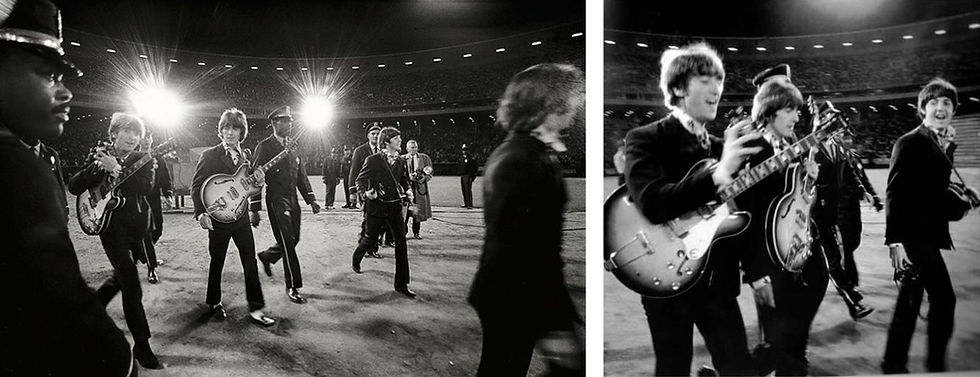
Diane Warren (songwriter): This is what blows my mind about the Beatles, it's what I tell people and no one can believe it: you realize that it was only 7 years between "I Want To Hold Your Hand" and "Let It Be." 7 years. And in those 7 years is Rubber Soul, and Sgt. Pepper, and Abbey Road, and the White Album, and Revolver... I mean, it's mind blowing. Because in that time now, you might get one or two albums from somebody, right? Artistically and commercially they were geniuses.
Brian Setzer (Stray Cats, Brian Setzer Orchestra): "Penny Lane" is just such an incredible song. I find myself singing it all the time. That's an A-flat minor 7th flat five... G major 7th ... F-sharp sustained. Man, those aren't rock chords — those are jazz chords. What I like about that is the Beatles snuck them in and nobody knew. I can't get over "Penny Lane."
Spike Lee (filmmaker) on what he cared about as a kid: Sports… Motown, the Beatles.
Eddie Murphy (actor): I love the Beatles. Growing up, I liked all the stuff that everyone else was listening to, like Motown, but the biggest group of all was the Beatles.
Bob Marley (musician): During the ’60s, I was listening to The Beatles. We even recorded one of the Beatles songs, you know? Yeah, so we used to listen to The Beatles a lot. The Beatles used to be a very popular group in Jamaica.
Richie Sambora (Bon Jovi): One of my earliest memories was sitting cross-legged on the floor in the living room… and watching the Beatles on The Ed Sullivan Show. I was five years old and I remember thinking, 'Wow! That's what I want to do.’ … most five-year-old boys say they want to be firemen or policemen or baseball players, or even the president. Not me. I wanted to be one of the Beatles. They were the most incredible thing I ever saw… I knew, even at that young age… that I was witnessing something truly life-changing. And not just for me, but for everybody as well. I used to stand in front of my bedroom mirror and play their records, doing air guitar before anybody even knew to call it air guitar.
They made people feel good. They gave people hope. They brought people together. Forty, almost 50 years later they're still doing it… Beatles albums are weird, beautiful things: they seem to change when you're not looking. You can play the White Album, then you might put it away for a few months. When you come back to it, it's like a whole new record and you hear all these different parts that you never heard before. That just doesn't happen with other bands.
Jon Bon Jovi (musician): The Beatles were everyone's Mount Rushmore. The Beatles were beyond Mount Rushmore; they were heaven.
Sir Gary Oldman (actor & filmmaker): What always amazes me about the Beatles is you think you know a song, you think you've heard it a hundred times, and then there's something in there and you go, "oh wow — they're doing that." Or "I never heard that before." They always surprise you; you never quite know what's around the corner. Especially if you're learning or playing the music, and you deconstruct — you pick out the keyboard and the guitar and the bassline, you just have a much, much deeper appreciation of what they achieved and what they were doing. And so young! I think Paul, what was he, 28 when the Beatles disbanded? Just remarkable. There's a reason why they're as amazing as they are.

Jim Carrey (actor & comedian): The Beatles r the greatest antidepressant ever created. Right now I’m listening to Rubber Soul and bathing in serotonin.
Michael McDonald (singer, keyboardist, & songwriter): I was also a Beatles fanatic… (On Rubber Soul) This is where The Beatles started to become much more experimental. There’s so much of the older stuff that — albeit well-crafted — seemed aimed at "What does a hit song sound like?" Here they started to become enigmatic, and that rekindled my whole appreciation for this band. They had strange aspects to the arrangements and harmonies that were really different from much of anything I’d heard before, and yet they reminded me of old rockabilly records. You really sensed that they were becoming their own entity.
Robin Willams (actor & comedian): Those songs... I think they're actually in my genetic material.
Billy Crystal (actor & filmmaker): They helped us grow up. They got me arrested three or four times.
Steven Spielberg (filmmaker): I was a teetotaler. I used to collect soundtrack albums from movies that I loved. I wasn’t smoking grass or taking LSD, though many of my friends were… I know, I know. I’m a disappointment. But I was just too busy making pictures. My mom was a concert pianist, so I was raised on Chopin, Schumann, Schubert, Brahms and Beethoven… I was a little bit behind the curve.
The paradigm for change came when I moved away to college. That’s when the White Album came out and I couldn’t get enough of the Beatles. For the first time, I began to get into what was considered normal for somebody my age. I wasn’t a Beatles fan until I listened to the White Album and became an instant convert.
Paul Thomas Anderson (director, screenwriter, & producer) on the most important influence or event in his life: Can I name seven? There's Dr. Strangelove; The Beatles, the Beatles, the Beatles - that's four; Meeting my girlfriend [Fiona Apple] - that's a cultural event for me. Stereo music and CinemaScope. Honestly, the answer is the Beatles, the Beatles, the Beatles, seven times. They're the most important thing that's happened this century.
John Carpenter (filmmaker & composer): The Beatles were the definitive thing for me. It didn't start that way. But I got curious — who are these guys, what is this band about? Then I got into it, I started listening to their songs. And they were so great. I just fell in love with them. I was a raving maniac all the way to the end.
Danny Trejo (actor): In 1968 l was in the hole in Soledad State Prison. The hole is a place where you go to make noise and scream and yell. So it's always noisy. And this song came on — Hey Jude, don't be afraid... the hole got quiet! And quieter. And quieter. Pretty soon, all you heard was this song. Until the Beatles started [screaming] Ju-Judy, Judy-Judy-Judy-Jud-AAAHH! And then the whole place just blew up. So "Hey Jude" will be in my heart forever. Every time I hear it, I remember that wonderful day when we became free for a minute.
Ray Charles (singer, songwriter, & pianist): "Hey Jude," now that's beautiful. That should be what music is all about. The Beatles were great performers, too; we worked together in Hamburg before they were famous. You could tell they had something, you know. Because they didn't sound like nobody else. They really did not sound like no other group that was around at the time — nobody ... But what they had was songs. The best. Never dirty — just beautiful songs you can play to your grandmother and your children alike. "Hey Jude" has that quality. It don't get any better than that.
J.K. Rowling (author): I remember coming back to university one drunken night on the train and starting to sing "Hey Jude" very drunkenly and out of tune, and EVERYONE in that carriage joined in. Everyone knew all the words. And we weren’t all drunk.
Jeff Buckley (musician): The Beatles, they were geniuses, you know? Music's like a sign language between people. When a guy from Iran or America hears the Beatles, they go "Wow!" They don't think of killing each other.
Carlos Santana (musician): Jesus and The Beatles — certain people come to this planet to create a bridge over the yawning gulf between God and humanity.
Dr. Yury Pelyoshonok (Soviet Studies professor): The Beatles had this tremendous impact on Soviet kids. The Soviet authorities thought of the Beatles as a secret Cold War weapon. The kids lost their interest in all Soviet unshakeable dogmas and ideals, and stopped thinking of an English-speaking person as an enemy.
Miloš Forman (film director): Well, I’ll tell you something. It sounds ridiculous, but it’s not. I’m personally convinced that the Beatles are partly responsible, directly, for the fall of communism. That’s when the communists lost two generations of young people, ideologically. Totally lost. That was an incredible impact.
Vladimir Pozner (Russian-American journalist): The Beatles did more to undermine the system than the most anti-Soviet literature for which people went to jail.
Sean Penn (actor & filmmaker): When the Berlin Wall came down, I think it had a lot more to do with Levi's 501’s and the dream of wearing them, and the Beatles' black market records than it did Gorbachev or Reagan. It’s just human dreaming having a power to make a change.
Sir George Martin (Beatles producer): Brian Epstein walked into my office with a record of this group called the Beatles, which I thought was such a stupid name. You know, so corny with an “a.” And they weren’t very good — it was raucous. I said, “Well, if you bring them down to the studios, I’ll have a look at ’em and see what happens.” I was very blasé about it. And they came into the studios — and it was like electricity. They had tremendous charisma. They had no great songs with them, but they gave you the feeling that you felt so good for being with them, and when they left, you felt as though something had gone away. I thought, “Well, if they have this effect on me, they’re gonna have an effect on everybody else.” So I signed them. Of course, eventually, they proved themselves to be tremendous songwriters.
William King (The Commodores): Add to [their music] — charisma and magnetism. That is what the Beatles had in abundance. They glowed. They clicked together. We wanted to have that.
Michael Kamen (composer, Die Hard, Lethal Weapon): We didn’t wanna be like the Beatles. We wanted to BE the Beatles. We wanted to be as energized, we wanted to be as irreverent, we wanted to be as funny, and we wanted to be as important.
Billy Preston (singer, songwriter, & keyboardist): I first met the Beatles in Hamburg in 1962. I was backing Little Richard and they were just one of fourteen other groups. They were the only group I bothered to watch. What was instantly obvious to me was that the Beatles weren’t like the other bands around then. Their harmonies, the way they dressed and their personalities set them apart from the others. They were also unique in the way a bunch of white guys handled black music and were able to add to it. We became really close.
The guys were just, it’s such a glow when all four of those guys are together. Like, the room glows.
"Get Back" was like a funk tune to me. It was a soulful song... I played my heart out on that. And "Let It Be" was a great song — it inspired "That’s The Way God Planned It." "Let it Be" inspired me to write that.
Rat Scabies (The Damned) on “Get Back": It's a good, old-fashioned tapalong, an up song, with a brilliant Elmore James slide solo that Lennon plays. And, of course, there's Ringo's groove. You knew it was the end. That was one of the things that actually makes "Get Back" really good. They didn't give a fuck anymore. All the stress had suddenly been released. It was coming back out again with this energy. There's also a very bizarre sexual message in the lyrics - "Jo Jo was a man who thought he was a loner..." Then, all of a sudden, it gets into this thing about Lauretta who was a woman who thought she was a man. We don't know what's happened to Jo Jo, so we assume he took Paul's advice and fucked off back to where he came from, which leaves Paul keeping on about "Lauretta, Lauretta, Lauretta”. If she thought she was a man, why does it piss off other women? Maybe something happened to Jo Jo along the way...
Christy Turlington (fashion model & philanthropist): The fashion sense that they had was incredible, at every stage, I’d say. But that early, early stage, the suits, you still see that keeps coming back in fashion today. Every other season there’s that tapered pant and fitted suit jacket and the thin lapels, the clean white and black look. I mean, it’s forever, it’s a classic.
The fact that they were so adventurous, so open… I think was incredibly inspiring for, you know, everybody.
Tommy Hilfiger (fashion designer): When the Beatles came around, everybody freaked. They just loved the look; they loved the music. It really revolutionized the way people dressed, it revolutionized the way people wore their hair. It started, I think, a revolution in America, and this sort of "I don't care" look is still very cool today... and it triggered an idea in my mind to start a business.

Barry Gibb (The Bee Gees): There's been so many groups that have influenced us, Maurice and Robin and myself. But above all, the Beatles. I think to this day, people not of our generation do not realize how huge the Beatles really were. Whatever they did to the world, they did it to all ages, they didn't do it to one age. Everyone loved the Beatles... and everyone wanted to be the Beatles.
Lionel Richie (singer, songwriter, & producer): We [The Commodores] did an interview… In the interview they said, “who are you guys?” and we said “we want to be the Black Beatles. We’re going to take over the world.” When the article came out it said, “Look out world, the Black Beatles are coming.” That’s the greatest thing you could ever write. We only had two hit records. So, it was just hilarious.
Billy Bob Thornton (actor & filmmaker): The Beatles changed my life. Subconsciously, I think I knew, that was never going to happen again. We all wanted to be the Beatles. I think that's driven every musician who was around in that time.
Here's why I think actors, musicians and artists are so fucked up: because there's one entity in entertainment that nobody can ever equal, and that's the Beatles. We all want to be the Beatles. And we can't be. We're trying to really say something and yet be that popular. In a way it serves a great purpose, because it makes us keep working.
John Fogerty (Creedence Clearwater Revival): You know, I was 18 when they hit. It was just so complete… I looked at the Beatles, as a fan, and loved all of it. I just thought the Beatles were the coolest thing that ever happened. And I still kind of feel that way.
Julie Taymor (director & writer): When I was working on the film, on Across the Universe, of course I looked at A Hard Day’s Night, or as much of the visual material as well, and they did the first music videos. That’s the other thing. So the connection with the visual, the fashion, the change in fashion. The fact that there was a major war that was so much a part of youth culture, the protests, that they had to change with the times. Just look at what was going on between 1962 or ’63 and 1968 or 1969. Look at the culture in, not just Great Britain and in America, but across the universe, across the world, and what was going on with the protests and the power of youth to make a difference.
I think they were at the beginning. So, therefore, they were young, naive, and open. They didn’t have a plan. But once they got on the airplane and went, they flew. And so they were so receptive. Not just to the past, but to the present they were living in — the drugs, the whatever, the how do you get revolution, the songs that were created. I don’t think that they started that way. They woke up and said, 'I’m so tired,' and went back to sleep again [laughs]. You know, every single waking moment was fodder for material. And that is fabulous. That is what is so great.
Shirley Manson (Garbage): That combination of songwriters in one band and at one time is luck that will probably never happen again. They were a collision of the stars…
The Beatles were a huge influence on me growing up, then when [John] left The Beatles and forged this solo career, I was really intrigued by him. He taught me to think differently, think about the world, be conscious in it. Nobody has been able to encompass his humanity, his humility and his humour, his wit and his intelligence quite the same way he has done — like the perfect rock star. He could write these amazing pop songs and talk about things that really mattered. He was a genius at it.
Reverend Al Sharpton (on John Lennon's death): I was home, and I heard it on the news. I had met Lennon through some of his peace efforts, and through the fact that I was close with James Brown. So it stunned me. People don't realize how much of an icon Lennon was even for those of us who weren't in rock 'n' roll. He also was one of the white artists who identified with black artists, and that's why a lot of black people had respect for him. He was giving Billy Preston and others opportunities before crossover was an understood thing in the music industry, and that was a big deal to black artists.
Steven Tyler (Aerosmith): As a kid, I used to go down to Greenwich Village all the time and fantasize I was going to bump into one of the Beatles or Stones. The Beatles taught us to fly, and John taught us to free-fall back to earth. When I heard the news [that he was murdered]... it ripped out a piece of me. I was physically angry for years after that fucker shot him. It felt good to have a cry because I was so fuckin’ pissed off… Jesus, what part of John or the Beatles did not get inside every one of us?

Stevie Wonder (singer, songwriter, & producer): There were two people who stirred a kind of emotion in me like no others: Martin Luther King Jr. and John Lennon. For years after Lennon was killed I could not hear "Imagine" without crying, because I could feel his soul in that song. I knew he would be the Beatle that would die first. I feared it for a long time. The reason I knew it was there was the song "God" — "God is a concept." I thought in my mind that the song could cause him trouble. It didn't bother me what he expressed in that beautiful song. But it only takes one person not to understand. If there's anything that made me cry so much when John Lennon was killed, it was to know that someone with their fucked up-ness stopped so much potential to make a difference in the world.
Every time one of their records came out, I wanted to have it. I dug the writing, the effects they got. I just said "Why can't l?" I wanted to do something else, go other places. The Beatles made me feel I could do some of the ideas that I had.
Sebastian Bach (Skid Row, singer, actor): When people ask, “What are your top 10 shows you’ve ever been to?” I just say to them, “Are you including KISS? Because if you are they take up the first five slots.” OK, maybe I would say The Beatles, I would have loved to see them.
I’m 56, and I don’t know what it is about music but to me, music is by far the most visceral art form. I can watch an old movie and cry. I can watch an old movie and it’ll hit me, but not the way John Lennon singing “Imagine” will hit me. There’s certain songs that I can’t listen to unless I’m ready. It’s almost like I’m going to put a seatbelt on because I know it’s going to rip my heart in two and I’m going to cry and all these feelings are going to come back to me.
Part Two - Continue Here:
Sources: The Beatles Revolution ABC TV Documentary (2000), original sources from interviews found online, and https://x.com/BeatlesPraise run by Perry Gartner https://perrygartner.substack.com/
How The Beatles changed the world, music and culture: quotes from global icons * Musicians and bands influenced by The Beatles * Quotes about The Beatles by famous musicians * Heavy Metal musicians influenced by The Beatles * Rap artists influenced by The Beatles * Hip hop artists influenced by The Beatles * Rock musicians influenced by The Beatles * How The Beatles influenced and changed popular and rock music * Country musicians influenced by The Beatles * Pop musicians influenced by The Beatles * Punk musicians influenced by The Beatles * R&B, Soul, and Funk musicians influenced by The Beatles * Famous artists, actors, and people influenced by The Beatles * The Beatles' influence across decades and genres


Comments